
A Beginner's Guide to Identifying Common Gemstones by Colour and Lustre
Learn how colour, transparency and lustre can help you recognise popular gemstones, with practical home tests, common lookalikes, and simple record-keeping habits.
A tray of mixed gemstones can feel like a puzzle with no corners. Yet most stones you will meet early in collecting announce themselves through two reliable signals: the colour you see, and the way light behaves at the surface. Read both carefully and you can identify a surprising number of stones on sight — or at least rule out most of the wrong answers before you reach for a loupe.
Colour Is a Starting Point, Not an Answer
Colour in gemstones comes from trace elements and the way a crystal's structure interacts with light. That is why the same mineral can appear in several colours, and why different minerals can look almost identical. Corundum gives us both ruby and sapphire. Beryl gives us emerald, aquamarine, morganite and heliodor. Meanwhile a green stone might be emerald, peridot, tsavorite garnet, chrome tourmaline or simply green glass.
Get into the habit of describing colour in three parts: hue (the basic colour), tone (how light or dark it is) and saturation (how vivid). Then note whether the colour shifts as you tilt the stone. Tanzanite and iolite are strongly pleochroic — tanzanite can look violet-blue one moment and purple-brown the next, while iolite often reads greyish-blue from one direction and distinctly purple from another. Amethyst does not do this. That single observation can save you a great deal of confusion.
Lustre: How a Stone Handles Light
Lustre describes the quality of light reflected from a stone's surface, and it is judged on a clean, dry stone in daylight. A smeared surface tells you nothing, so wipe the stone with a soft cloth first. The main types you will encounter are:
- Adamantine — the hard, almost splintery brilliance of diamond.
- Vitreous — glass-like, the most common lustre: quartz, corundum, beryl, tourmaline.
- Resinous — a softer, slightly sticky sheen, typical of amber and many garnets.
- Greasy — as though lightly oiled, often seen in jade.
- Silky — a parallel sheen, as in tiger's eye and satin spar.
- Pearly — the soft glow of pearl and moonstone.
- Waxy — muted and slightly matte, common in turquoise and much chalcedony.
- Metallic — the mirror-like finish of pyrite or haematite.
Lustre is a quick filter. A vivid green stone with a waxy surface is unlikely to be emerald; a bright green stone with a resinous sheen points you towards garnet rather than tourmaline.
Transparency, Inclusions and Optical Effects
Ask whether the stone is transparent, semi-transparent, translucent or opaque. Then look inside. Inclusions are not merely flaws — they are clues. Rutile needles, often called silk, appear in corundum. Peridot frequently contains distinctive disc-like inclusions, and demantoid garnet sometimes shows a horsetail-like spray of fibres. A loupe at ten times magnification reveals a great deal that the naked eye misses, including facet-edge wear, which suggests a softer stone that has seen some handling.
Some stones reveal themselves through a single optical effect. Chatoyancy gives a moving band of light, as in chrysoberyl cat's eye. Asterism produces a star, most famously in sapphire. Adularescence is the drifting blue sheen of moonstone; aventurescence is the spangled glitter of sunstone; play-of-colour is the flashing spectrum of opal. Learn these five terms and a whole category of identification becomes straightforward.
Colour tells you where to look. Lustre, inclusions and heft tell you whether to believe your eyes.
Common Gemstones by Colour at a Glance
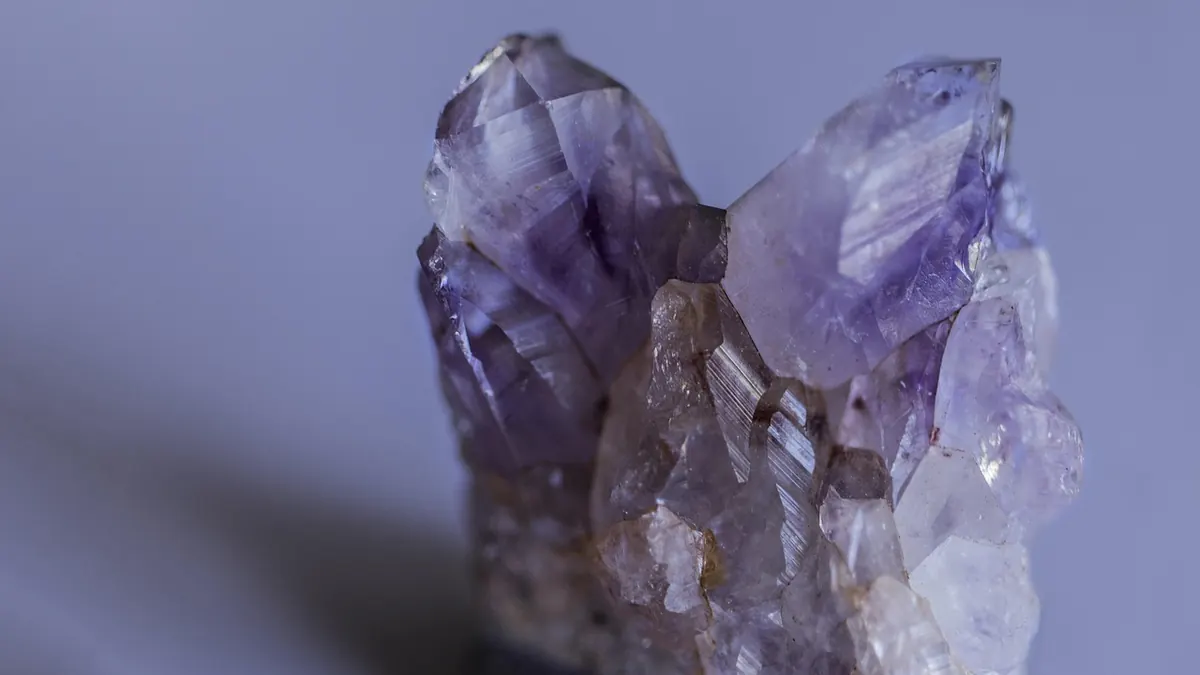
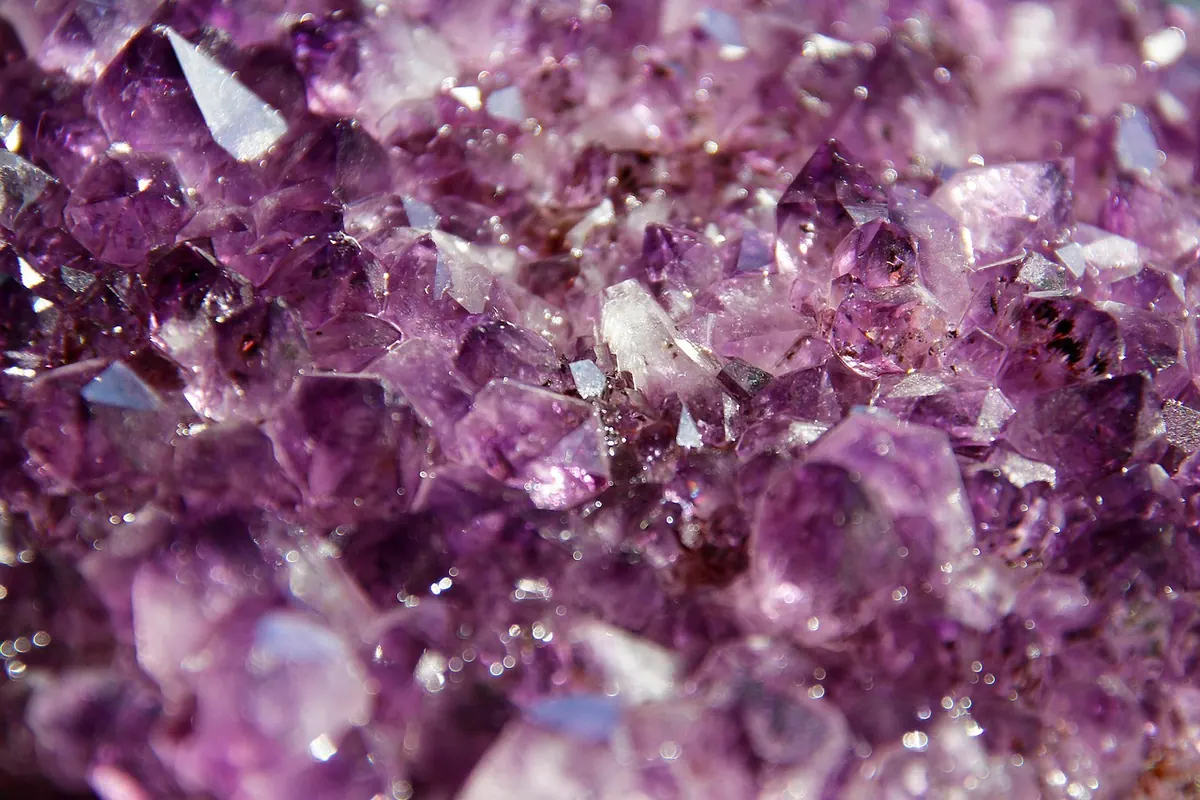
- Purple: amethyst (vitreous, often with colour zoning), purple fluorite (softer, frequently banded), purple spinel, and opaque charoite with its swirling pattern.
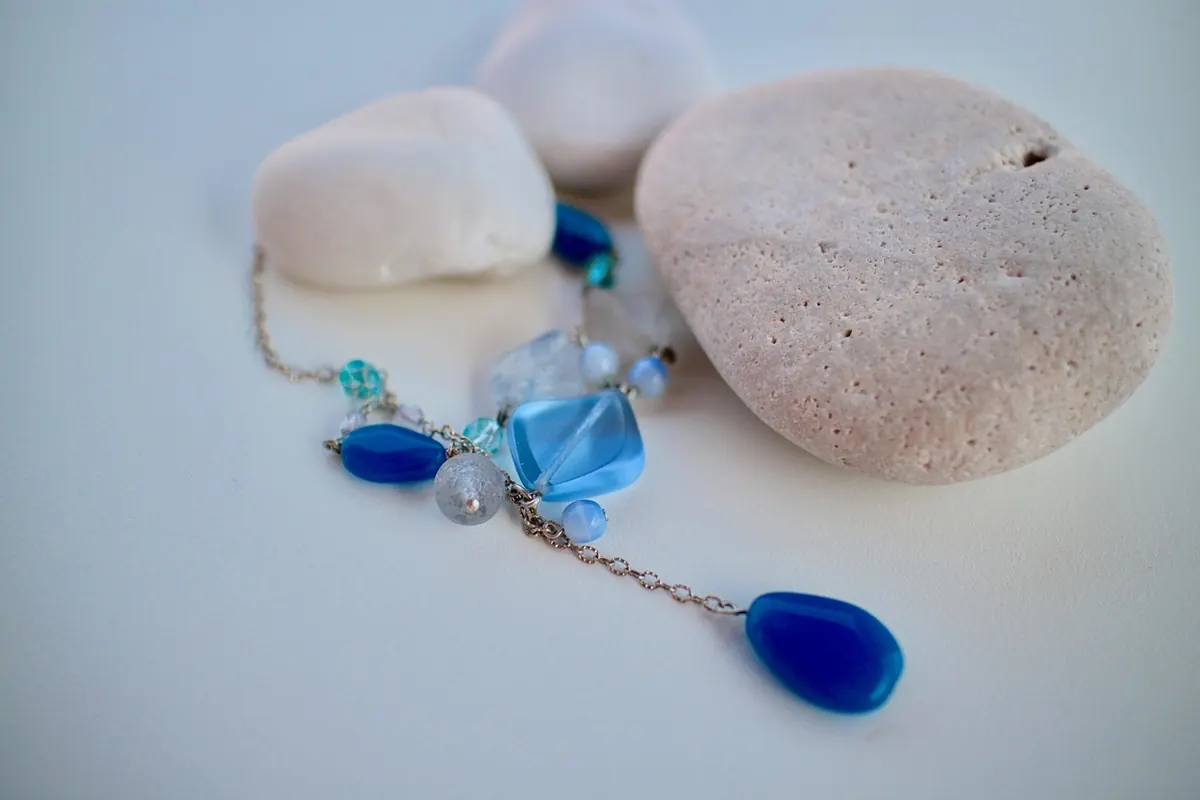
- Blue: sapphire (vitreous, often with silk), blue topaz (clean and cool-toned), aquamarine (pale blue-green), tanzanite (violet-blue and pleochroic), iolite (greyish-violet), and opaque lapis lazuli, which usually carries flecks of pyrite.
- Green: emerald (rich green, typically included), peridot (olive green, shows facet doubling), tsavorite and chrome tourmaline, greasy-looking jade, and banded opaque malachite.
- Red: ruby (often described as glowing, with silk), garnet (resinous and frequently darker), spinel, and red tourmaline.
- Yellow and orange: citrine, yellow topaz, heliodor, and amber — resinous, very light in the hand, and warm to the touch.
- Pink: rose quartz (cloudy and translucent), morganite, and banded opaque rhodochrosite or rhodonite.
- Colourless: rock crystal, topaz, zircon, and the hardest group of all — synthetic stones and glass.
Simple Tests You Can Do at Home
- Clean the stone and work in daylight near a north-facing window. Direct sun flatters colour; warm indoor bulbs distort it.
- Place the stone on a plain white or mid-grey surface. Background changes what your eye reports.
- Compare against a known reference stone side by side, never from memory.
- Weigh it in your hand. Corundum and zircon feel heavier than quartz of a similar size; amber feels remarkably light.
- Use a ten-times loupe to check for facet doubling, inclusions and edge wear.
- Note how it feels to the touch — quartz feels cool, amber and resin feel warm. Treat this as a hint, not proof.
- Never scratch a finished stone, and keep acids, ultrasonic cleaners and chemical tests away from anything mounted.
Keep Records, and Know When to Ask an Expert
Buy a handful of inexpensive reference specimens — rough and cut where possible — and start a notebook. For each stone, record the hue, tone and saturation in daylight, the lustre, the transparency, anything you see under magnification, and the date and source. Photograph them in the same spot each time so your images are comparable. Five stones learned thoroughly will teach you more than fifty glanced at.
Remember that synthetics, treatments, assembled stones and imitations can mimic natural gems convincingly, and colour plus lustre alone cannot settle every question. If a stone matters to you financially — for insurance, sale or inheritance — have it identified in writing by a qualified gemmologist or a recognised laboratory rather than relying on your own eye.
Where to Practise Next
Gem and mineral shows, local lapidary and gem clubs, museum mineral galleries and well-lit jewellers' windows all offer free practice. Take your loupe, look at as many stones as you can, and describe each one aloud before you read the label. Keep a small set of reference stones with you so comparisons are always close at hand. The skill builds quietly: after a few weeks you will start noticing lustre before colour, and that is when identification stops being guesswork.
Photo: Dieter444 / Pixabay