
How to Spot Fake Turquoise: A Practical UK Buyer's Guide
Learn how to tell real turquoise from dyed howlite, resin and reconstituted block, with simple at-home checks and the questions to ask before you buy.
Turquoise has been imitated for as long as it has been prized, and the imitations have never been better. Browse a UK gem fair, a jewellery stall at a weekend market, or a certain kind of online listing, and you will meet stones that look convincing until you get them under a loupe. The good news is that most fakes give themselves away with a few simple checks, and with a handful of direct questions asked before you pay.
Here is what the common imitations actually are, what you can test at home, and how to buy with more confidence.
Why Turquoise Is So Easy to Copy
Natural turquoise is a hydrated copper aluminium phosphate, around 5 to 6 on the Mohs scale, and it is porous. That porosity matters. It means turquoise readily takes up dye, resin and wax, and it means cheaper white minerals can be stained blue and sold as something they are not.
Good turquoise is also genuinely uncommon. Tight, hard material with attractive matrix is a small share of what any mine produces, which is why a decent natural cabochon can be priced well above an almost identical-looking treated stone.
The Usual Suspects: Common Turquoise Imitations
- Dyed howlite. The classic. Naturally white with grey veining, dyed blue and sold as turquoise. The veins are often too uniform, and the dye pools in the cracks.
- Dyed magnesite. Harder to spot than howlite. Look for a chalky surface and colour that sits in the grain rather than through the stone.
- Reconstituted or "block" turquoise. Turquoise dust mixed with resin and pressed into blocks. It may contain real turquoise, but it has no natural structure, and you will see a plastic-like sheen.
- Resin and polymer clay. Moulded, painted, sometimes with imitation matrix drawn on. Usually light in the hand and warm to the touch.
- Dyed jasper and "African turquoise". A trade name for a dyed or naturally speckled jasper, not turquoise at all. Sold openly as such, but easy to misread in a search bar.
- Dyed dolomite, chalk and glass. Cheap, convincing in photographs, and usually obvious in person.
- Misleading names. "Bone turquoise" is fossil material that has been stained blue, and "turquoise matrix" often describes rock with barely any turquoise in it.
Five Checks You Can Do at Home
- Look closely first. A 10x loupe or your phone's macro setting will do. In dyed stones, colour concentrates in cracks and pits, and often sits slightly darker around the edges of a vein. Natural turquoise usually shows colour and matrix interlocking naturally.
- Wipe an inconspicuous spot with acetone. On the back of a cabochon or the inside of a bead hole, a cotton bud dampened with nail polish remover will lift dye from howlite and magnesite. It will not dissolve resin, but it may dull a polished surface, so test sparingly and never on a finished setting.
- Weigh it in your hand. Turquoise feels cool and fairly dense for its size. Plastic, resin and chalk feel light and warm up quickly against your skin.
- Warm a needle — only on loose stones. On a hidden area of a loose bead or cabochon, a heated needle tip will melt resin and smell distinctly of plastic. Genuine stone will be unaffected. Do this in a ventilated room, keep it away from finished jewellery, and accept that you may mark the piece.
- Use a UV torch as a hint, not a verdict. Many resins and some dyes fluoresce, while most natural turquoise does not glow much. Plenty of genuine stones behave unexpectedly, so treat this as one clue among several.
What Real Turquoise Actually Looks Like
Colour varies enormously by source, from the pale sky blue often associated with Iranian material to the greener, softer tones of many American mines. Some stones are almost clean; others carry a web of brown limonite or black oxide, or small bright flecks of pyrite. None of that is a defect, and it is often what makes a piece worth owning.
What you are looking for is a waxy to dull lustre rather than a glassy or plasticky shine, colour that varies subtly across the face of the stone, and matrix that looks like a crack or a seam running through rock rather than a line drawn on top. If every vein is the same width and perfectly spaced, be suspicious.
Read the Label Before You Read the Price
Turquoise is treated in several legitimate ways, and honest sellers will tell you which one you are looking at.
Stabilised
Resin is drawn into the stone to harden it. The material is real turquoise, but it is worth noticeably less than untreated stone. This is the most common form in affordable jewellery.
Treated or enhanced
A vague word that can mean dyeing, waxing or resin. Ask exactly what was done.
Reconstituted, block or composite
Pressed powder, fragments or a mix of materials held together with resin. Not mined turquoise in any meaningful sense, however pretty it is.
If a listing says "turquoise colour" or "turquoise howlite", believe the description: it is telling you it is not turquoise.
Questions to Ask Before You Buy
- Is this natural turquoise, stabilised turquoise, reconstituted material, or a lookalike?
- Has it been dyed or otherwise colour-treated?
- Where was it mined, and can you name the locality?
- Can you send a close-up photograph of the back or underside in daylight?
- What is your return policy, and how long do I have?
- Can you confirm these details by email?
A seller who answers clearly and without irritation is a good sign. Vague replies, pressure to buy quickly, or claims that a stone is "untreated, museum-grade" at a bargain price are not.
Buying With Your Eyes Open
In the UK, goods sold to you must match their description, and distance purchases generally come with a short cancellation window, so a careful seller should not object to you inspecting a piece or sending it back. Keep the listing, any emails, and pay by card where you can.
For anything expensive, or if a stone matters to you, consider an independent gemmologist or a professional laboratory that offers identification. It costs money, but it settles the question properly — and if a purchase is significant, it is worth taking that advice before you commit.
Most of all, slow down. Look at the stone in daylight, not under shop lighting. Check the back as carefully as the front. Real turquoise has an organic, slightly uneven quality that is very hard to fake, and once you have handled a few genuine pieces, your eye will start to catch the difference before your tests do.
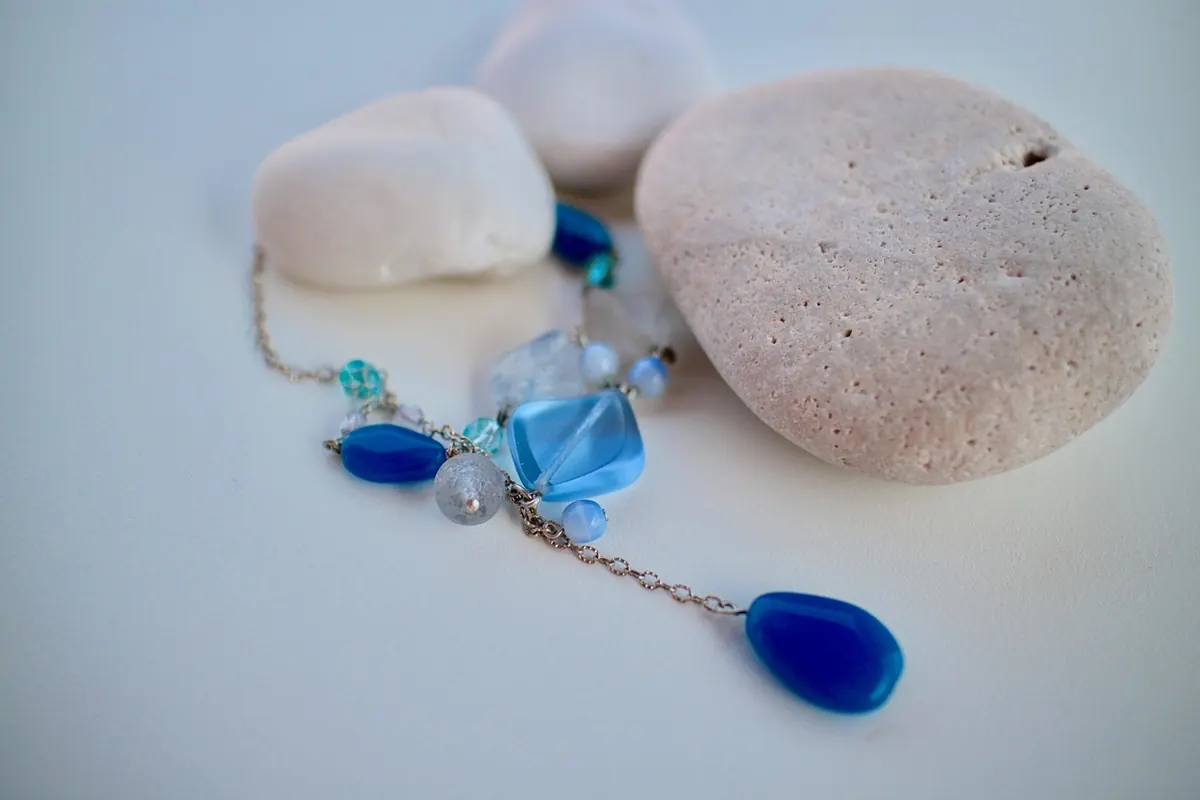
Photo: sweetlouise / Pixabay