
Birthstone Jewellery Explained: What to Wear for Each Month
A month-by-month guide to traditional and modern birthstones, with styling ideas, metal pairings and practical care notes so your birthstone jewellery survives everyday wear.
Birthstones give a date to a piece of jewellery. That is their charm: a garnet for a January birthday, a pearl for a June bride, a sapphire for a September milestone. The lists have shifted over the centuries, and most months now have two or three accepted stones, which is good news for anyone who has been handed a deep blue sapphire when they would rather wear something soft and green. Here is what belongs to each month, how to wear it, and how to keep it looking well.
Traditional, Modern and Alternative: Which List Matters?
Traditional birthstones come from older European and religious lists, where months were linked to specific stones and their supposed virtues. The modern list was standardised by American jewellers' associations in the early twentieth century, and trade bodies have added alternatives since — tanzanite for December, spinel for August, tourmaline alongside opal for October.
Nothing is broken by choosing one list over another. If you were born in March and prefer the dark green of bloodstone to pale aquamarine, wear bloodstone. The practical rule is simple: pick the stone you will actually put on, because a birthstone that stays in a drawer is just a nice thought in a box.
January to March
January — garnet. Both lists agree here. Garnet covers a wider family than most people expect: deep red almandine, fiery orange spessartine, and the vivid green tsavorite. Red garnet sits warmly against yellow or rose gold; green tsavorite looks sharper in white metal. At roughly 7 on the hardness scale, it is fine for rings, though a garnet worn daily will dull faster than corundum.
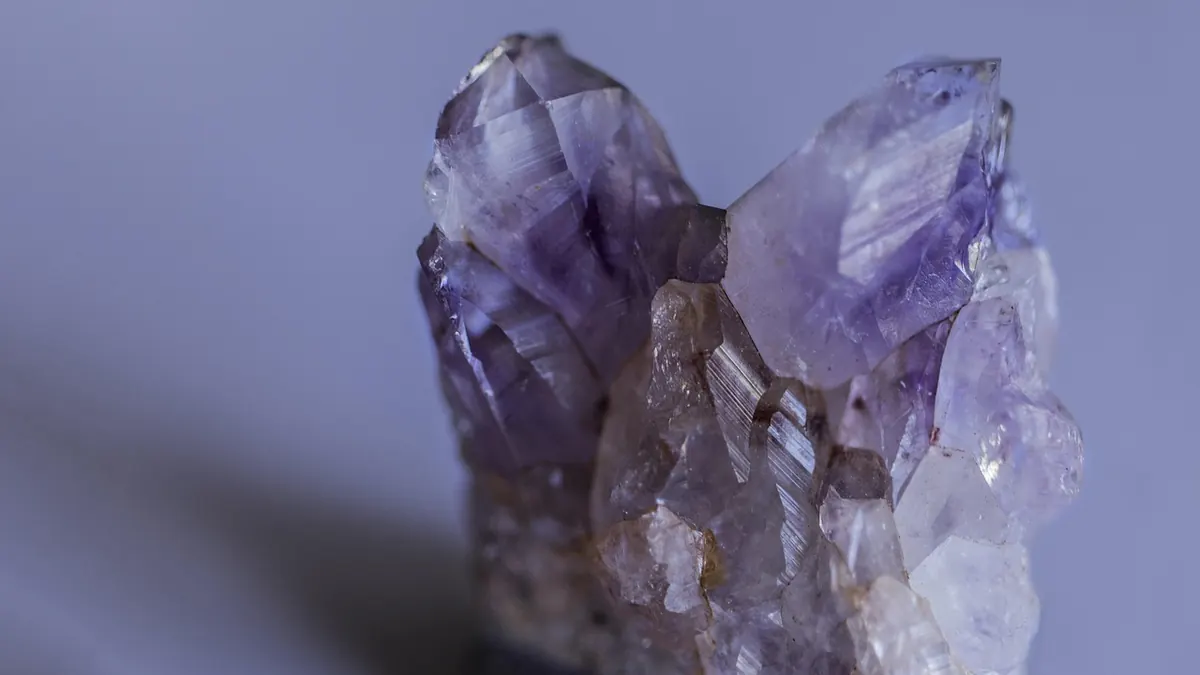
February — amethyst. Purple quartz, plentiful and reasonably priced, which means you can buy a generous size without a generous budget. It suits silver, platinum and white gold, and a large amethyst in a simple bezel makes an excellent pendant. Keep it out of long, direct sunlight, as the colour can fade over time.
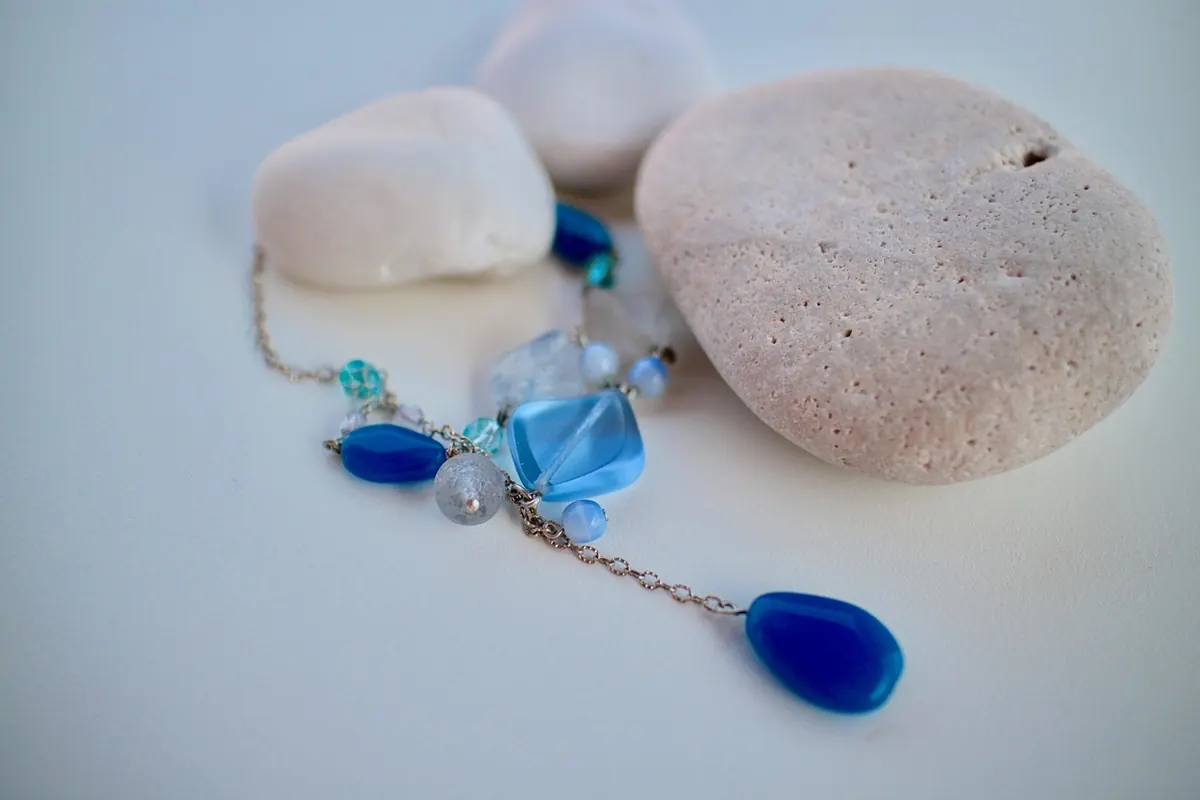
March — aquamarine and bloodstone. Aquamarine, the modern choice, ranges from near-colourless to a soft sea blue; the deeper tones cost more. Bloodstone, the traditional stone, is dark green flecked with red and works beautifully in a signet ring or a plain cabochon. Aquamarine is reasonably tough but often included, so treat heavily included stones gently.
April to June
April — diamond. Traditional and modern lists both name diamond, with white sapphire, white topaz and rock crystal as affordable stand-ins. Lab-grown diamonds are chemically the same as mined ones and are a legitimate option if budget matters. Diamonds are durable but can chip at the edge, so have the claws checked once a year if you wear the ring daily.
May — emerald. Nearly every emerald contains some internal fractures, and most are oiled or filled to improve clarity. That makes them beautiful and slightly delicate. Skip the ultrasonic and steam cleaners, avoid sudden temperature changes and harsh chemicals, and choose a protective setting rather than tall claws for everyday wear. Chrysoprase is the older alternative if you want the green without the maintenance.
June — pearl, moonstone and alexandrite. Pearl is the traditional favourite and the most fragile stone on this list. Put pearls on last, after perfume and hairspray, wipe them with a soft damp cloth, and have a well-worn strand restrung every few years. Moonstone has a soft, floating glow and needs a bezel or protected setting because it cleaves. Alexandrite, the rare one, shifts colour between daylight and lamplight.
July to September
July — ruby. Corundum, the same mineral family as sapphire, and second only to diamond in hardness, which makes it one of the best birthstones for a ring you never take off. Warm soapy water and a soft brush are all it needs. Older lists name carnelian, a cheerful orange-red that costs far less.
August — peridot, sardonyx and spinel. Peridot's yellow-green looks freshest in daylight and pairs well with yellow gold and spring wardrobes. It is moderately hard but dislikes acids and sudden heat, so remove it for cleaning and gardening. Sardonyx is the traditional banded stone; spinel, the newer addition, comes in strong pinks and blues and is tough enough for daily rings.
September — sapphire. Blue is only the beginning: pink, yellow, green and padparadscha sapphires are all available. Like ruby, it takes hard wear well. Lapis lazuli is sometimes used as an alternative, but at around 5 to 6 on the scale it is softer and better kept for earrings and pendants.
October to December
October — opal and tourmaline. Opal holds water, which is why it dislikes heat, dry air and rapid temperature changes; store it in a soft pouch rather than a hot windowsill. A pendant or pair of earrings protects it better than a ring. Tourmaline, the modern partner stone, comes in almost every colour and is a much tougher choice for everyday wear.
November — topaz and citrine. Topaz reaches 8 on the hardness scale, but it has one weakness: perfect cleavage, meaning a sharp knock at the wrong angle can split it. Avoid ultrasonic cleaning on treated or fracture-filled stones. Citrine, the yellow quartz often sold alongside it, is affordable, sunny and very hard-wearing. Blue topaz is usually heat-treated or irradiated, so ask what you are buying.
December — turquoise, zircon and tanzanite. Turquoise is porous, so keep it away from perfume, suncream, lotions and chlorine; stabilising and other treatments are common and should be disclosed at the point of sale. Tanzanite is beautiful and comparatively soft, better suited to earrings and pendants than a ring you wear constantly. Zircon sparkles brilliantly but dislikes hard knocks.
Styling Birthstone Jewellery
The easiest way to make a birthstone look intentional rather than sentimental is to let it be the only colour in the outfit. A single stone against a plain metal and neutral clothing reads as considered.
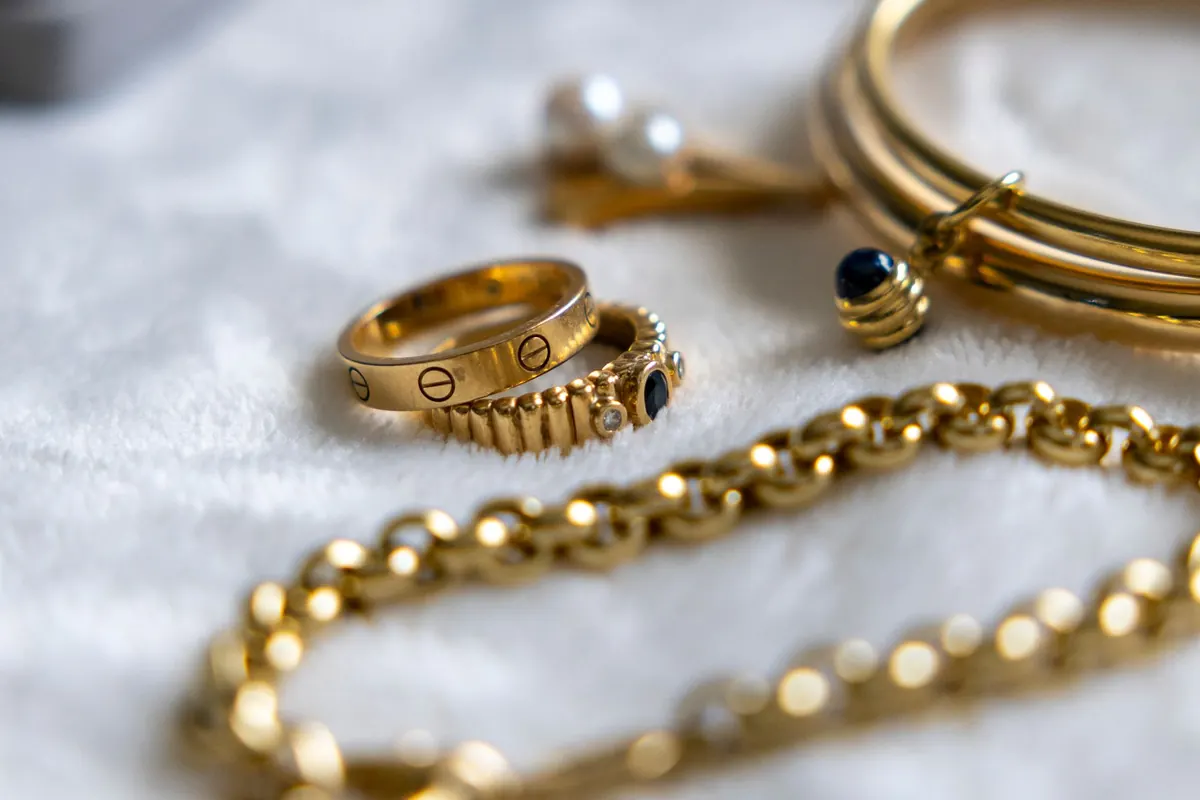
- Yellow gold: garnet, citrine, peridot, ruby, topaz — warm stones that gain depth.
- White gold, platinum, silver: aquamarine, sapphire, moonstone, tanzanite, diamond, pearl.
- Rose gold: morganite, pink tourmaline, ruby, amethyst, red garnet.
- Stacking: keep bands to one stone plus a plain or textured ring, and match metal thickness so nothing rubs.
- Layering: a birthstone pendant works best on a chain that differs in length from anything else you are wearing by at least 5cm.
If you are buying for someone else, their birth month is only a starting point. A stone they already wear in another piece, or a colour that matches their usual palette, will be worn far more often than a correct-but-unloved one.
Care Notes That Cover Most Stones
- Warm water, a drop of mild washing-up liquid and a soft brush are safe for diamond, ruby, sapphire, amethyst, citrine, garnet and tourmaline.
- Skip the ultrasonic and steam cleaner for emerald, opal, pearl, turquoise, tanzanite and any fracture-filled or treated stone.
- Put jewellery on after perfume, hairspray and lotions, and take it off before swimming, cleaning, gardening or the gym.
- Store pieces separately in soft pouches so harder stones cannot scratch softer ones.
- Have claws checked and pearls restrung periodically, especially if the piece is worn often.
Before You Buy or Gift
Ask two questions in any shop: has this stone been treated, and what is your returns policy? Treatments are normal and often necessary, but you are entitled to know. If the piece matters financially, check whether your home contents insurance covers jewellery away from home, or ask about adding it as a specified item — your insurer can advise on the details.
Finally, a note for anyone drawn to crystals for their calming or grounding associations: enjoy them as part of a wider routine, but do not treat any stone as a substitute for advice from a qualified healthcare professional. Birthstone jewellery is at its best as something you wear often, look at fondly and pass on. Choose the stone that suits the wearer, look after it properly, and it will outlast the trend that inspired it.
Photo: Stephen Leonardi / Pexels