
Amethyst vs Rose Quartz: Which Crystal Suits Your First Collection?
A practical comparison of amethyst and rose quartz for beginners, covering looks, hardness, cleaning, common uses and how to choose your first piece.
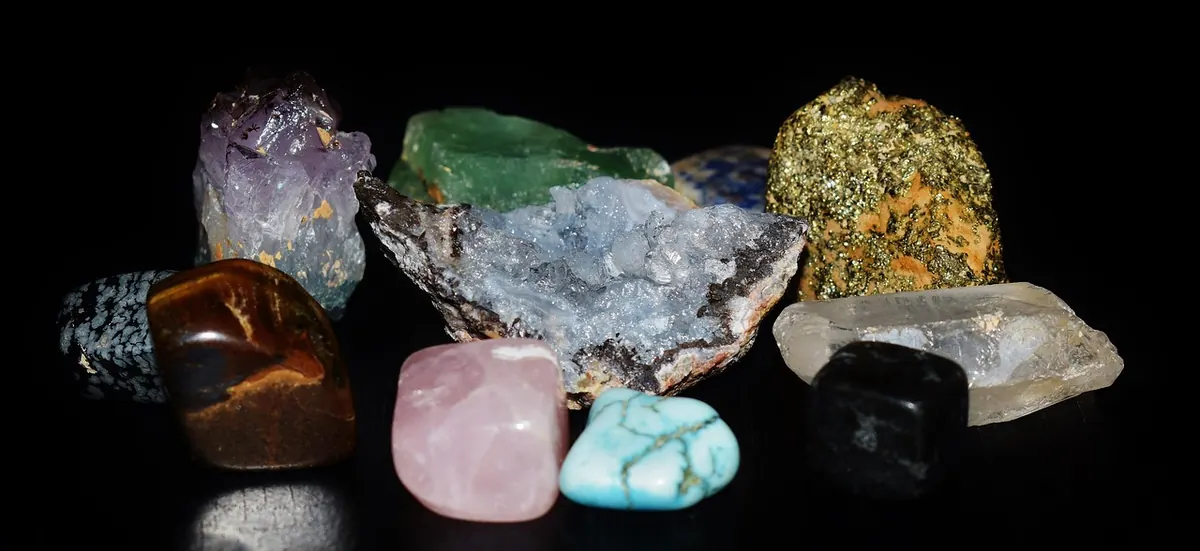
Amethyst and rose quartz tend to sit side by side in crystal shops, often in the same basket and often at similar prices. They are close cousins, both varieties of quartz, which is why many beginners assume the choice comes down to colour alone. It does not quite. The two stones photograph differently, wear differently in a pocket or on a chain, and get reached for in different moments. Here is a practical comparison so you can choose the one that suits how you will actually use it.
Two relatives with very different habits
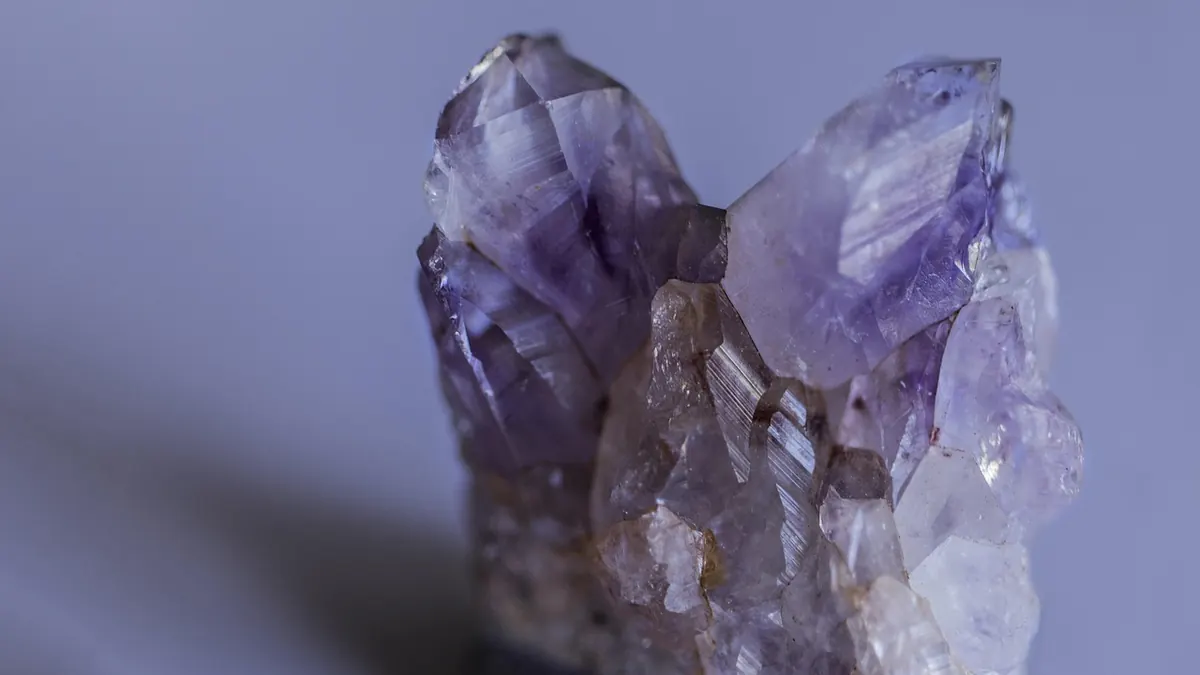
Amethyst is quartz coloured by trace iron, and it usually arrives as a recognisable crystal: pointed terminations, clustered groups, faceted beads, polished points standing on a shelf. Because the colour often concentrates towards the tip, a single specimen can run from milky white at the base to deep purple at the point.
Rose quartz rarely forms those neat points. It is a massive variety, mined in chunks, and its pink comes from trace elements together with fine fibrous inclusions inside the stone. That difference shapes what you can buy. Tumbled stones, spheres, hearts, palm stones, carved shapes and beads are all standard in rose quartz. You can find those in amethyst too, but amethyst also gives you clusters, cathedrals and single points, which is a large part of its appeal.
How each stone looks and feels
Amethyst colour runs from pale lilac to a smoky grape purple. Good pieces look clear under light and show depth; duller ones can look grey or brownish and slightly flat. Rose quartz is milky and soft, usually translucent to opaque, and a nice piece seems to glow when you hold it against a lamp. Once in a while a sphere will show a six-rayed star in strong direct light, a feature known as asterism, but do not expect it in a cheap tumbled stone.
In the hand, amethyst feels cooler and slightly crisper. The edges of a cut point can be sharp enough to catch on knitwear, so think twice before dropping one loose into a handbag. Rose quartz feels smoother and waxier, and warms up quickly.
Hardness and durability: what actually causes damage
Both stones sit at 7 on the Mohs hardness scale, so both resist everyday scratches well. Neither will be marked by a fingernail or a set of keys in the same pocket. Where they differ is in toughness, which is a separate thing from hardness.
Drop an amethyst point on a tiled floor and it will often chip at the tip, and that chip is the first thing you will notice every time you look at it. A tumbled amethyst or a bead is far safer to carry. Rose quartz is generally more forgiving in the hand, but the internal fractures that give it its cloudy prettiness can be weak points, and a sharp knock can open a crack that was already there.
Both stones are also known to fade with long exposure to strong sunlight, amethyst especially. A week on a windowsill is fine. A year on a windowsill is how a deep purple stone becomes a pale lilac one.
Care and cleaning rules that cover both
- Clean with lukewarm water and a drop of mild washing-up liquid, using a soft brush such as an old toothbrush. Rinse and pat dry with a soft cloth.
- Avoid sudden temperature changes. Hot water followed by cold can crack either stone, and rose quartz's internal fractures make it the less forgiving of the two.
- Skip ultrasonic and steam cleaners. Avoid bleach, vinegar and acidic cleaners, which dull the polish over time.
- Store separately in a soft pouch or a lined box so harder stones in your collection cannot scratch them.
- A brief rinse in salt water is a common habit, but a long soak is unnecessary. Dry thoroughly, particularly around metal settings, which can corrode or discolour.
- If you like to leave a stone in sunlight, keep it to a few hours rather than a season.
What people use them for
In crystal traditions, amethyst is associated with calm, focus, moderation and sleep, which is why it so often ends up on a bedside table or a desk. Rose quartz is linked to kindness, self-compassion and relationships, so it tends to be carried in a pocket, kept near a mirror or given as a gift. These are associations rather than tested effects, and it is worth being honest about that while still enjoying them.
Crystals are not a substitute for medical care, and a stone will not sort out your finances or a legal problem. If something in your life needs proper attention, speak to your GP, a qualified adviser or a solicitor. One practical caution as well: do not drink water that stones have been soaking in, especially dyed or treated pieces or anything set in metal.
Choosing by shape
A tumbled stone is the sensible first buy: cheap, smooth, pocketable and hard to damage. A palm stone gives you something flatter to hold during a quiet five minutes. A point or cluster works as a display piece on a shelf, but keep it out of reach of children and away from the edge. A sphere is the most decorative and the least portable, and it needs a stand.
Buying your first piece without overthinking it
In a shop, hold the piece up to the light and look along its surface. Run a fingernail gently across any crack: if the nail catches, the crack is deeper than a surface mark and the stone may split later. Check the tip of an amethyst point for existing chips, and look at the colour in daylight rather than under shop lamps.
Dyed rose quartz is common, and dye tends to pool in the cracks and look unnaturally vivid. If you are unsure, ask the seller whether the colour is natural, and treat a very bright pink stone at a very low price with suspicion. Buy one good piece rather than three poor ones; a well-chosen tumbled stone will outlast a shelf of bargain bin finds.
So which one should you choose?
If you want to carry something daily, rose quartz is the easier companion, though a tumbled amethyst works just as well if you prefer the cooler feel. If you want a shelf piece with presence, amethyst wins comfortably. If you are drawn to calm and sleep, amethyst is the conventional starting point. If you want a gift for someone going through a hard time, rose quartz is the gentler choice.
Pick up both in the shop and notice which one you keep returning to. The stone you enjoy handling is the one you will actually use.
A simple way to start
Buy one tumbled rose quartz and one small amethyst point, which between them cover carrying and display, and keep them in separate pouches. Clean them once a month with lukewarm water, dry them fully, and find one spot in your home where each one lives, so they become part of a routine rather than clutter. From there, add pieces slowly as you notice what you reach for. Most collections that feel satisfying were built one considered stone at a time, not in a single afternoon of panic buying.
Photo: Brett_Hondow / Pixabay