

Five Common Mistakes When Starting a Crystal Collection (and How to Avoid Them)
New to crystals? Avoid overspending, fake stones, scratch damage, sun-faded colour and impulse buys with these practical habits.

A first crystal collection rarely stays small for long. A tumbled amethyst from a market stall, a birthday rose quartz, a payday splurge on a palm-sized selenite tower — and suddenly there are forty pieces crowded onto a windowsill. That part is lovely. The less lovely part is the money spent on stones you never bonded with, the amethyst that went pale behind the glass, and the "moldavite" that turned out to be green glass. None of it is difficult to avoid. These are the five mistakes that catch out most new collectors, and what to do instead.
1. Spending before you know what you like
The quickest way to spend a lot of money on crystals is to buy a lot of crystals. Beginners often start with a job lot of thirty tumbled stones in a velvet pouch, then add a tower, a geode and three spheres in the same month. Six weeks later, half of it sits in a drawer.
Decide what a single piece is worth to you before you look at anything. A monthly budget and a per-piece ceiling do more for a collection than any sale ever will. Then buy fewer, better pieces: one palm-sized fluorite you keep picking up beats ten anonymous tumbles you can't tell apart.
It also helps to hold a stone before buying where you can. Weight, temperature and the way it sits in your hand tell you more than a listing photo ever will. If you can't handle it first, sleep on anything above your usual spend — most stones will still be there tomorrow, and the ones that aren't were never really yours.
2. Not checking what you're actually buying
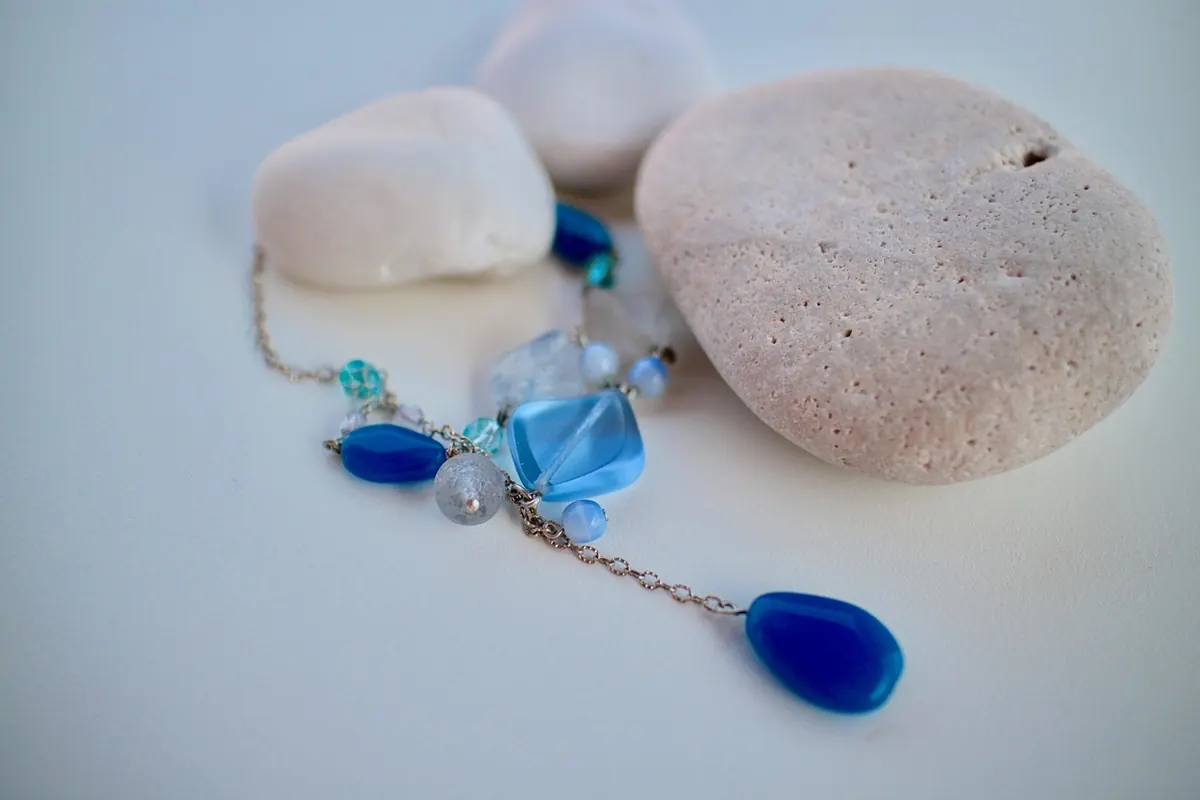
The gem and mineral trade is mostly honest, but its labels are often loose. Heat-treated amethyst is routinely sold as citrine. Dyed agate is sold as "blue lace". Glass is sold as opalite, and resin turns up as amber. Coated quartz — the iridescent "aura" stones — is real quartz, but it has been treated, and a seller should say so.
A few habits will protect you:
- Look for bubbles and swirl marks. Air bubbles mean glass or resin, not mineral.
- Check how the colour sits. Dye pools in cracks and looks darker in the fractures; natural colour is usually less even but more convincing.
- Ask about treatment. A seller who can't tell you whether a stone has been heated, dyed or coated is a seller to be cautious with.
- Treat rare material with care. Moldavite, larimar and fine gem rough attract fakes. Buy those from specialists who can describe where a piece came from.
- Slow down at unusually low prices. A bargain on a scarce stone is usually a sign the stone isn't what the label claims.
Learn the handful of species you own properly — quartz, amethyst, agate, calcite — and the fakes become much easier to spot.
3. Storing stones so they scratch each other
Crystal is a hard material, but plenty of collectible minerals are soft. Selenite, halite, calcite, fluorite and malachite mark easily, and a bag of mixed tumbles shaken together will slowly dull every piece in it. Quartz and agate, meanwhile, will happily scratch everything softer.
Give each stone its own space: a small pouch, a compartment box, or a shelf with a little distance between pieces. Keep it in a dry spot — halite and some sulphates pull moisture from the air — and label pieces with the name and where you bought them. You will not remember in two years, and a labelled collection is far more useful and enjoyable than a mystery pile.
One safety note worth taking seriously: some minerals contain metals that you don't want around food or small children. Galena, cinnabar and malachite are examples. Wash your hands after handling them, keep them out of the kitchen, and store them away from pets and young children. If you're ever worried about exposure or something has been swallowed, speak to a doctor or your local poisons service rather than guessing.
4. Displaying them in direct sunlight
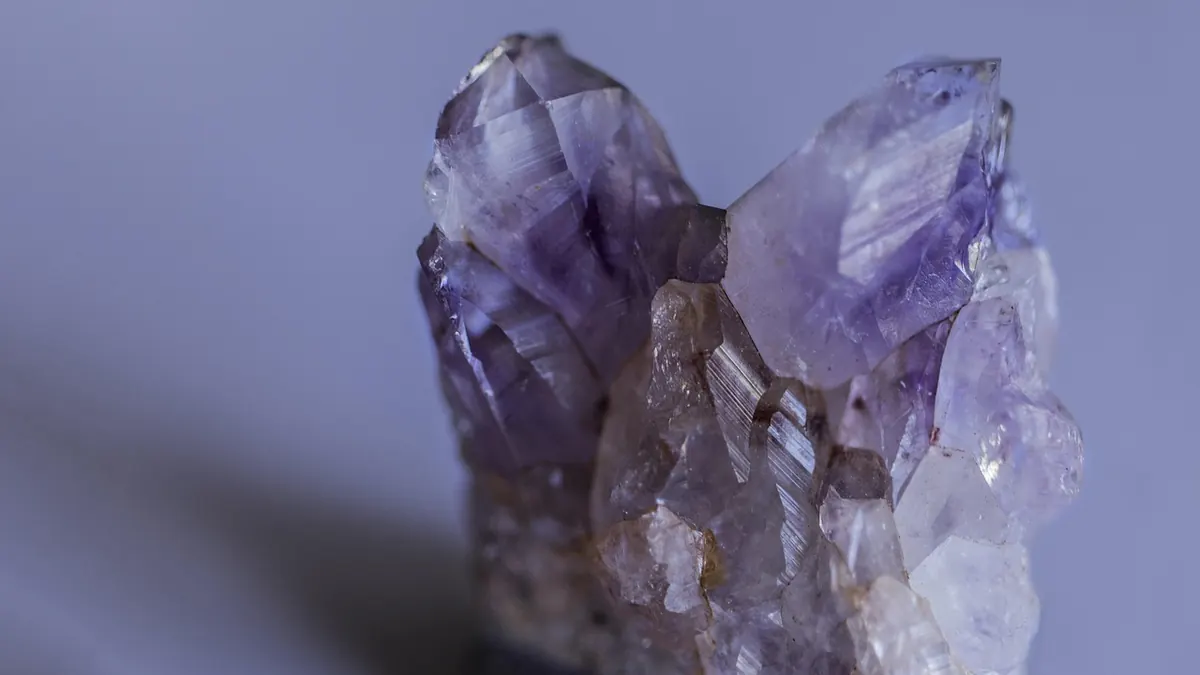
Sunlight is the quiet thief of crystal collections. Amethyst, rose quartz, smoky quartz, fluorite, kunzite and some topaz will fade over months on a bright south-facing windowsill, and the change is gradual enough that you rarely notice until you compare an old photo. Dyed stones can fade too. In most cases, colour lost this way can't be brought back at home.
Choose your display spot accordingly. A shelf that gets gentle morning light, or a spot a metre back from the window, keeps most pieces looking as they did on the day you bought them. Rotate the display if you want sun on it. Clear quartz, agate, jasper and black tourmaline are far more forgiving of bright light. And keep spheres or large polished pieces out of strong direct sun — they can focus light and heat onto whatever is behind them.
5. Letting impulse buys build the collection
Live sales, auction endings and late-night scrolling are built to make buying feel urgent. They work. Most collections have a corner of stones bought in a hurry that never quite earned their place.
Try a 48-hour rule for anything you didn't plan to buy, and keep a running wish list on your phone instead of buying on the spot. Ask one practical question before checkout: where will this actually live? If you can't picture a shelf, it's probably a no. Collections that stay interesting tend to have a thread — a colour family, a locality, a mineral group — and that thread is easier to follow when you're not reacting to whatever appeared in a feed that evening.
Starting a collection you'll still love in five years
None of this requires willpower or expertise. It requires a few small habits, repeated:
- Set a monthly budget and a ceiling per piece, and stick to them.
- Learn two or three species properly before adding more.
- Ask what a stone is and whether it has been treated.
- Store each piece so it can't touch or scratch another.
- Keep the display out of direct sunlight and away from damp.
Do that and you'll spend less, keep better stones, and end up with a collection that means something rather than one that simply accumulated. Start with one piece you genuinely love. The rest can wait.
Photo: tianya1223 / Pixabay