
How to Clean and Care for Crystal Jewellery Without Causing Damage
How to clean silver, gold and gemstone jewellery safely at home, with gentle methods for delicate crystals, pearls and elastic bracelets that last.
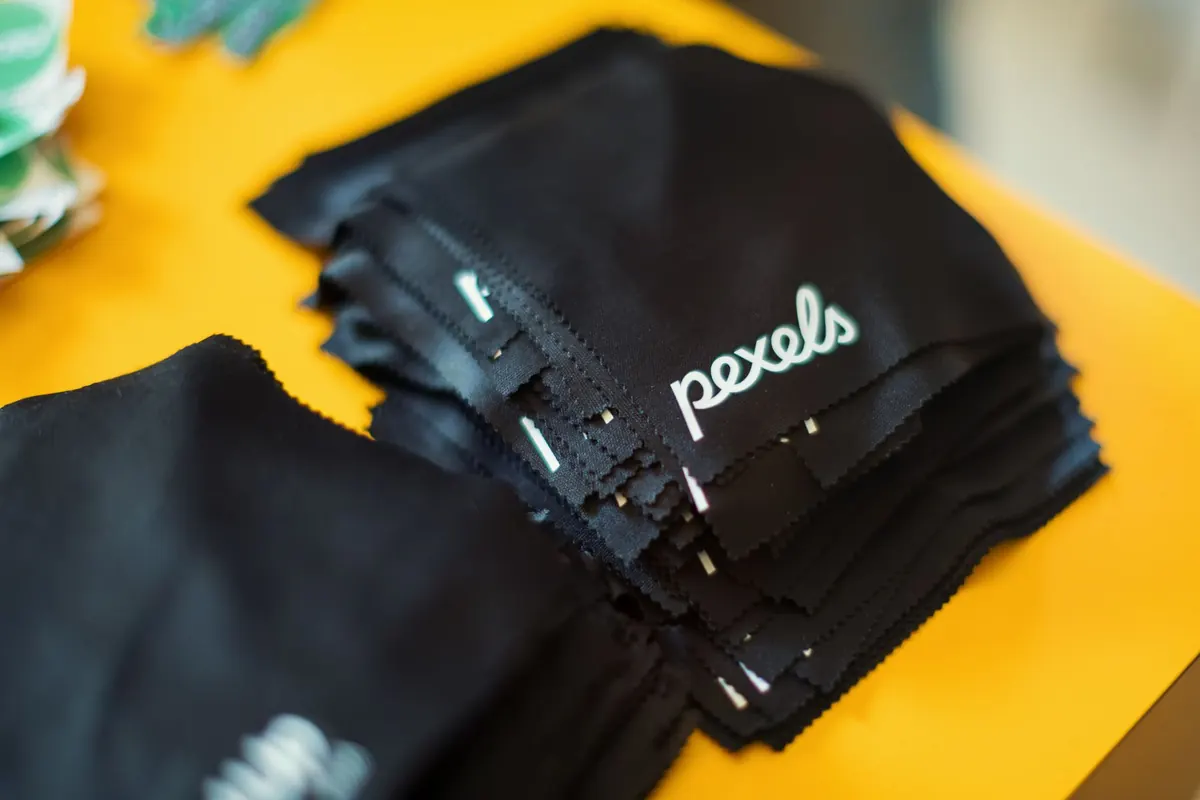
Jewellery that has been worn for a while collects more than dust. Skin oils, hand cream, hairspray, perfume and soap all build up in the crevices around settings, and that flat grey film you notice is often just residue rather than damage. Most pieces can be brought back to life at the kitchen sink in a few minutes.
The risk is doing too much. A dip in an ultrasonic tank, a scrub with toothpaste or a soak in hot water can cause harm that no polish will undo. Gemstone and crystal jewellery needs a little more thought than a plain silver chain, because the stone tends to set the limits: hardness, treatments and porosity decide what a piece can survive.
Three rules, a small kit and a soft touch
If you remember nothing else, remember these. Use the mildest method that works, not the strongest one available. Keep water lukewarm rather than hot. And dry everything properly — trapped moisture behind a setting is what causes discolouration and loose stones.
You do not need a cabinet of specialist products. This is enough:
- Two soft cloths: a lint-free microfibre cloth for drying, and a silver polishing cloth kept for silver only
- A soft baby toothbrush or jeweller's brush with natural bristles
- Mild, unscented washing-up liquid — no lemon, bleach or abrasive cleaners
- A small bowl of lukewarm water, and a plugged sink or fine sieve
- Soft pouches or a lined box for storage
Check every piece before it goes near water. Look for loose claws, wobbly stones, cracks, or glue around settings. Anything suspect should go to a jeweller first.
How to clean silver jewellery safely
Silver tarnishes because it reacts with sulphur compounds in the air, which is why a chain left in a drawer can dull without being worn. Soapy water removes the grime; a polishing cloth removes the tarnish.
- Soak plain silver in lukewarm water with a drop of washing-up liquid for one to two minutes. Do not leave pieces with glued stones or pearls to soak.
- Brush gently, working around the claws and behind the setting where residue hides.
- Rinse in clean lukewarm water, or under a slow trickle with the plug in.
- Dry thoroughly with the soft cloth, then buff with the silver cloth until it shines.
Silver dip will strip tarnish in seconds, but use it sparingly and only on plain, unplated silver. It can attack pearls, opals, turquoise and other porous stones, and it removes the deliberate darkening on antique or oxidised finishes. Always rinse dip off completely afterwards. Polishing cloths are treated with compounds, so keep them away from stones and never use one on gold.
How to clean gold jewellery safely
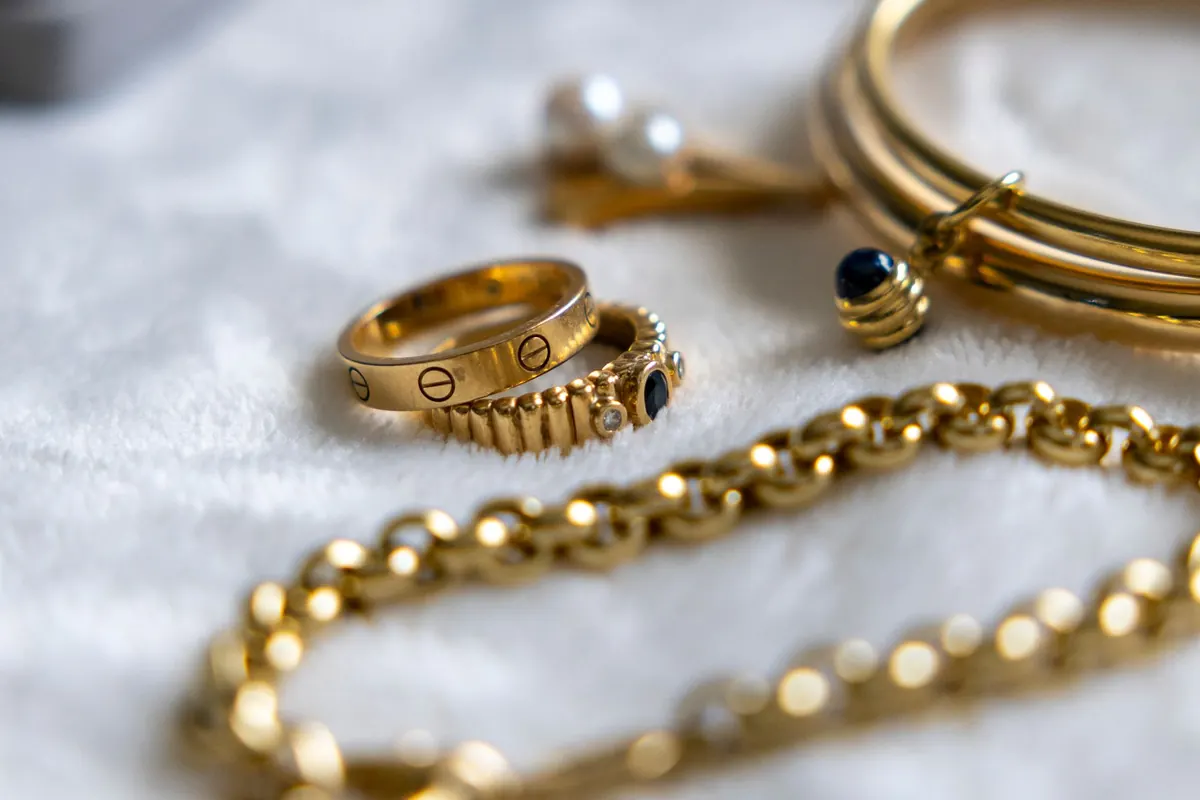
Gold is more forgiving, but it is softer than most people assume and it scratches easily. Warm soapy water, a soft brush, a rinse and a dry polish will handle almost everything: rings, chains, earrings and bracelets alike.
Skip toothpaste and bicarbonate of soda. Both are abrasive, and on plated, gold-filled or vermeil jewellery they will wear through the layer of gold and leave a patchy finish. With those pieces, wash gently, pat dry and leave it at that. White gold is usually rhodium plated, and that plating thins over time — a jeweller can re-plate it when the colour starts to look tired.
Keep all gold away from chlorine, including pools, hot tubs and bleach-based cleaners. Repeated exposure weakens solder joints and plated layers, and it damages most gemstones too.
If a piece is valuable or antique, or set with emeralds, opals, pearls or tanzanite, let a jeweller clean it. A professional clean costs far less than replacing a stone.
Cleaning gemstone and crystal jewellery by stone type
Hard, durable stones
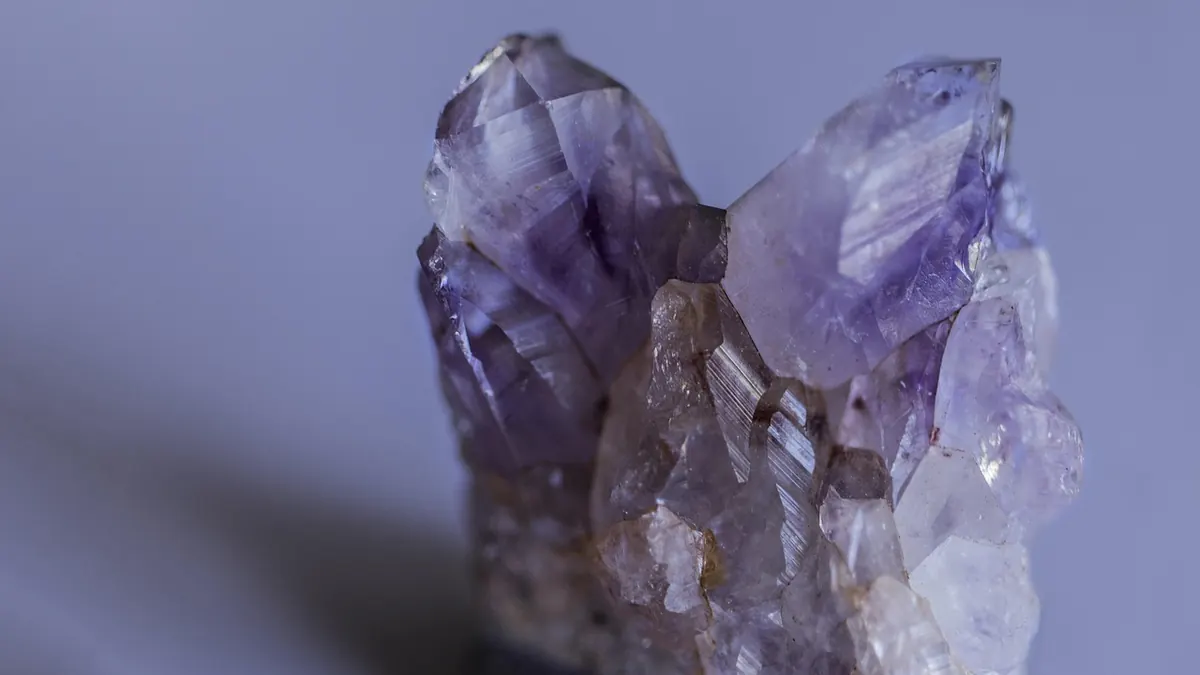
Diamond, ruby, sapphire, amethyst, citrine, clear quartz and other stones around 7 or above on the hardness scale cope well with lukewarm soapy water and a soft brush. Work around the claws, rinse and dry. Diamonds attract grease, so a drop of washing-up liquid makes a visible difference.
Stones needing gentler handling
Emeralds are commonly oiled or resin treated, so keep them out of ultrasonic cleaners, steam and hot water, and limit soaking — wipe with a barely damp cloth instead. Tanzanite, peridot and kunzite dislike sudden temperature changes, so use lukewarm water only and dry immediately.
Opals, turquoise, malachite, lapis and amber are porous or heat sensitive. Never soak them, never use an ultrasonic cleaner, and never use silver dip. A soft dry cloth, or one barely dampened, is usually all that is safe.
Selenite and halite (rock salt) are water soluble and will cloud or pit if they get wet. Dust them with a dry, soft cloth and keep them away from the bathroom altogether.
Beaded, elastic and crystal-bead jewellery
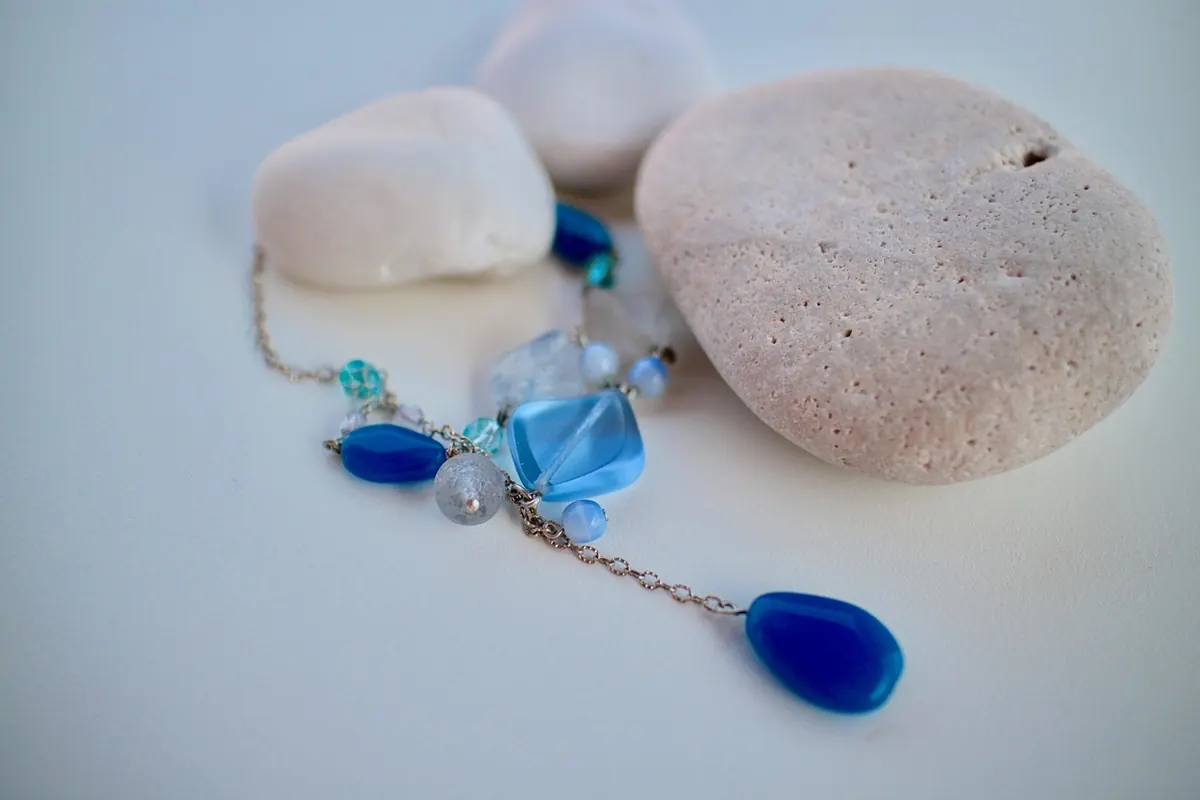
Stretch bracelets are the exception to almost every cleaning rule, because the problem is rarely the beads — it is the cord. Water, soap and repeated soaking break down elastic thread and encourage it to snap.
Wipe bead by bead with a soft cloth that is barely damp, then lay the bracelet flat to dry completely. Never hang a stretch bracelet, and never leave one in a hot car. Roll it on and off over your hand rather than stretching it. If the cord looks frayed, stretched or has lost its snap, restring it before it fails somewhere inconvenient.
Storing crystal jewellery and everyday habits
Half of jewellery care happens when the piece is not being worn. Get into the habit of putting jewellery on last, after perfume, hairspray and lotion have dried, and taking it off first at night. Showering, swimming, washing up and the gym are all best done without rings and bracelets.
Store pieces separately in soft pouches or a lined box. A diamond will scratch gold, quartz will scratch softer stones, and a tangle of chains causes its own damage. Silver keeps its shine better in a tarnish-resistant pouch or a closed box with a sachet of silica gel, away from damp rooms. Keep the bathroom out of the equation.
Finally, check your settings once or twice a year: hold each piece up to a light and look for claws that have lifted, or stones that move when you press them gently. If you are unsure, take it to a jeweller before you wear it again.
Two minutes at the sink, once a month, plus careful storage, will keep most collections looking as good as the day they were bought. Gentle beats thorough every time.
Photo: Matheus Bertelli / Pexels