
What Is the Mohs Hardness Scale? A Simple Guide for Gemstone Collectors
The Mohs scale ranks minerals by scratch resistance. Here's what those numbers mean for everyday wear, cleaning and storing your gemstones safely.
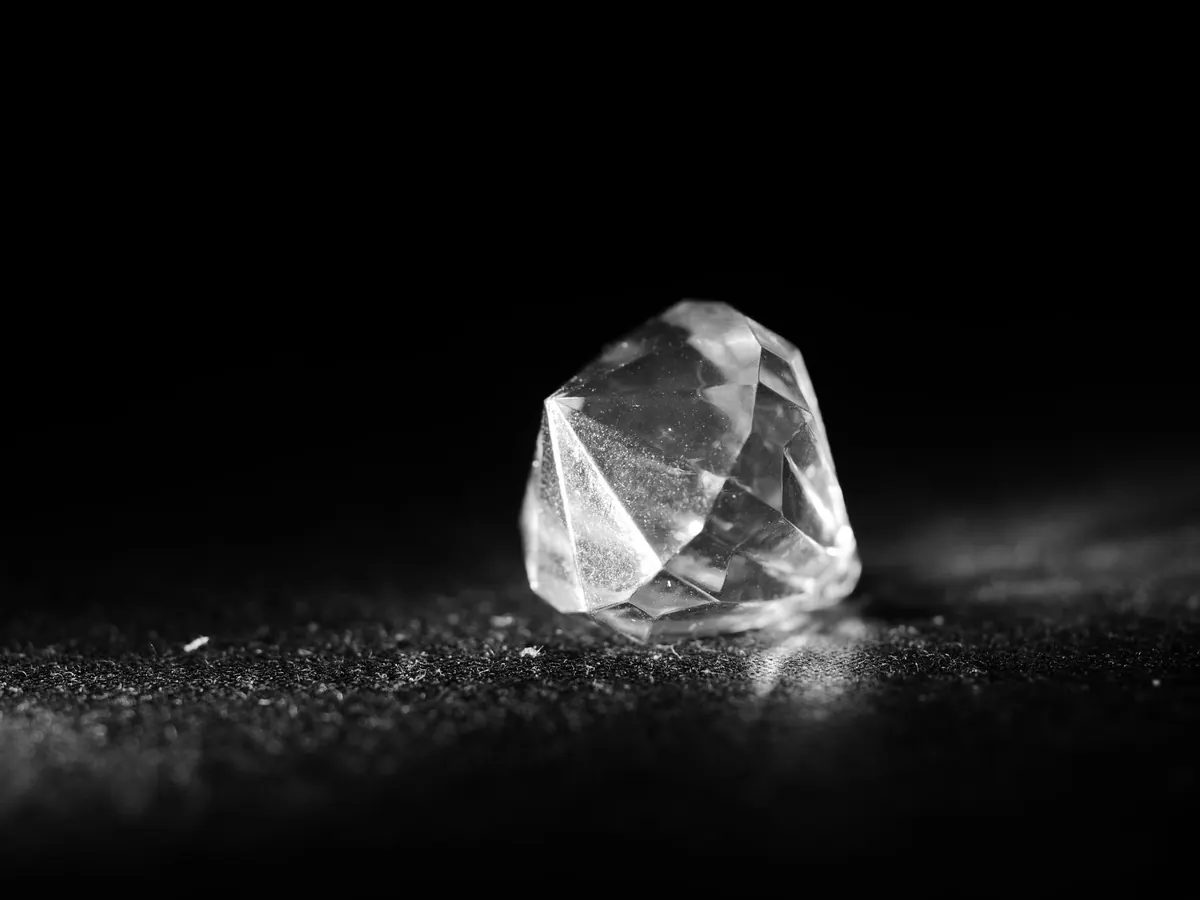
Pick up any gemstone reference and you will meet the Mohs hardness scale within a page or two. Diamond sits at 10, talc at 1, and everything else lines up somewhere between. That much most collectors know. What causes trouble is the next step: assuming a high number means an indestructible stone, or that a low number means a fragile one. Neither is quite true, and the difference matters every time you choose a ring for daily wear or decide which stones can share a drawer.
This guide walks through what the scale actually measures, what it does not, and how to use it as a practical filter when you are buying, wearing or storing stones.
What the Mohs Scale Actually Measures
Devised by the German mineralogist Friedrich Mohs in 1812, the scale ranks ten reference minerals by their ability to scratch one another. A mineral that scratches another is harder; the one that gets scratched is softer. It is an ordinal scale, not a linear one. The jump in actual hardness between corundum at 9 and diamond at 10 is far greater than the gap between talc at 1 and quartz at 7. Nature simply does not grade herself evenly.
Two things are worth pinning down before you go further. First, the scale measures scratch resistance only. It says nothing about how a stone copes with a sharp knock. Second, gem hardness is directional and can vary slightly within one species, so a listed figure is best treated as a useful average rather than an absolute law of physics.
In practice you rarely need a laboratory. Simple field tests work well enough for a rough sense of where a stone sits. A fingernail scratches talc and gypsum. A copper coin scratches calcite. A steel knife blade scratches fluorite and apatite. Quartz scratches window glass; most things do not.
The Reference Minerals
The ten minerals on the scale, in order:
- Talc
- Gypsum
- Calcite
- Fluorite
- Apatite
- Orthoclase feldspar
- Quartz
- Topaz
- Corundum (ruby and sapphire)
- Diamond
Feldspar at 6 is the line most collectors remember, because it marks the boundary between stones that shrug off everyday grit and stones that do not. Household dust contains quartz at 7, which is why a soft stone left on a windowsill or worn loose in a pocket can slowly lose its polish.
Where Common Gemstones Sit
Reference minerals are useful, but most of us buy gems rather than mineral specimens. These are widely used figures for common stones:
- 10: diamond
- 9: ruby, sapphire
- 8: spinel, topaz
- 7.5–8: emerald, aquamarine, morganite
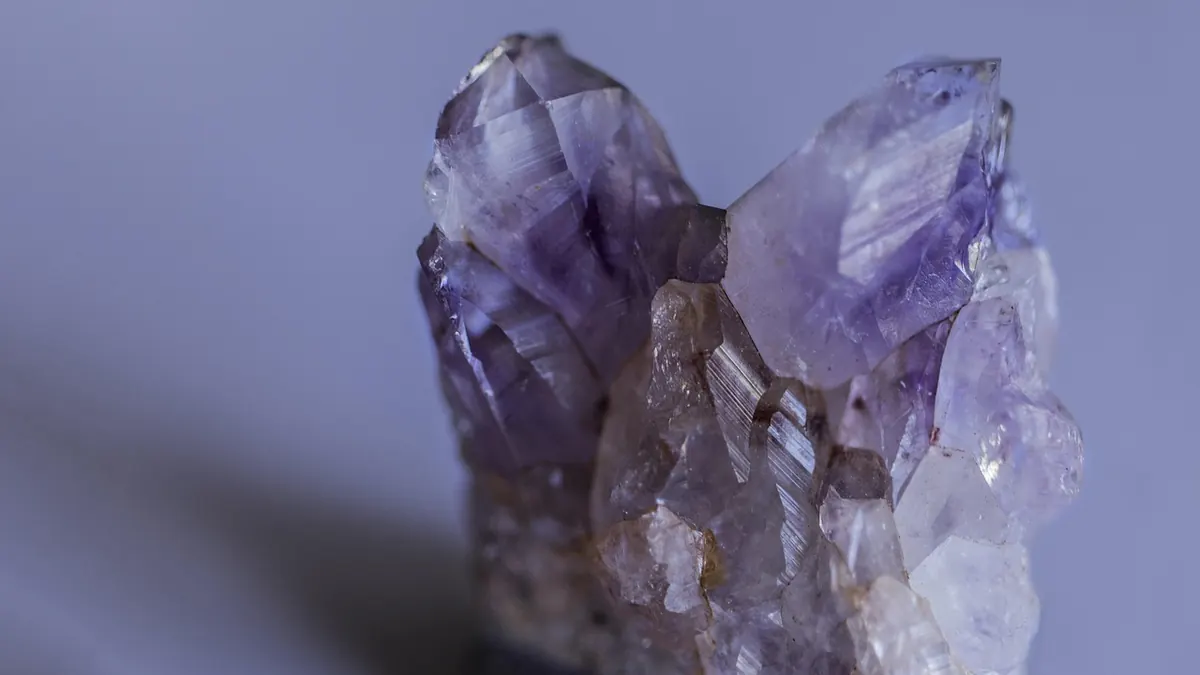
- 7: quartz in all its forms — amethyst, citrine, rose quartz, smoky quartz
- 6.5–7: peridot, tanzanite (usually listed around 6–6.5)
- 6: moonstone, labradorite, other feldspars
- 5–5.5: lapis lazuli, turquoise, obsidian
- 4–4.5: fluorite, rhodochrosite
- 2.5–4.5: pearl, amber, opal
Notice how quickly a beautiful collection drops below the feldspar line. Amber, opal, pearl, turquoise and fluorite are all soft enough to be marked by a fingernail or a key.
Why Hardness Matters for Everyday Wear
If you wear a ring every day, it will meet car doors, shopping trolleys, kitchen worktops and grit on the pavement. That is an abrasive environment, and scratch resistance is your main defence. As a rough guide:
Rings for daily wear. Diamond, ruby, sapphire and spinel handle this best. Anything at 7 or above, such as amethyst or aquamarine, can work well with a little care and a protective setting.
Occasional rings. Emerald, opal, pearl, turquoise and tanzanite are better saved for days when you are not hauling bags or gardening. Emeralds deserve special mention: they are relatively hard at 7.5–8, but their internal fractures make them vulnerable to a sharp knock rather than a scratch. Hardness and toughness are different properties.
Earrings, pendants and brooches. These take far less punishment than rings, so softer stones such as opal and pearl are perfectly at home here.
The best real-world test is to think about your own hands. If you wear a ring while cleaning, typing, cooking and carrying shopping, choose by hardness as well as by beauty.
Hardness Is Not Toughness
This is the distinction that trips up most collectors. Hardness resists scratching. Toughness resists breaking, chipping and cracking. Jade is softer than quartz yet famously tough, which is why it has been carved for millennia. Diamond is the hardest substance on the scale, yet a well-aimed blow along a cleavage plane can split one. A stone can be hard and brittle, or soft and surprisingly resilient.
Cleavage matters here too. Stones that split cleanly in one direction, such as topaz and fluorite, need more respect than their hardness number suggests. Handle them over a soft surface, not a tiled floor.
Storing Stones So They Do Not Scratch Each Other
Hardness becomes very practical the moment two stones share a box. The harder one will quietly scratch the softer, and the damage often only shows up months later as a dull, hazy patch. Use these habits:
- Store each stone in its own compartment, pouch or soft wrap. Never tip a mixed handful into one bag.
- Keep diamond, ruby and sapphire away from everything else, ideally in a separate tray.
- Wrap softer stones — opal, pearl, amber, turquoise, fluorite — in acid-free tissue or a soft cloth, not plastic, which can trap moisture.
- Lay strands of beads flat or hang them, so harder beads do not grind against softer ones.
- Keep pieces separated in a jewellery box rather than piled in a bowl, and use a travel roll when you are away from home.
A note on cleaning
Hardness also guides cleaning. Warm water with a drop of mild washing-up liquid and a soft brush suits most durable stones. Avoid ultrasonic and steam cleaners for emerald, opal, pearl, turquoise, tanzanite and anything fracture-filled or treated. When in doubt, clean with a soft damp cloth and dry gently. If a piece is valuable or you are unsure of its treatment history, ask a qualified jeweller or gemmologist before cleaning it.
Using the Scale Wisely
Treat the Mohs scale as a buying filter rather than a verdict. Ask three questions of any stone: how hard is it, how tough is it, and how will I actually wear it? A 9 ruby is wasted if it sits in a drawer for fear of damage, and a 5.5 turquoise can be worn happily for years in a pendant. Match the stone to the job, store it away from harder neighbours, and let the numbers inform your choices instead of dictating them. Your collection will stay brighter for longer, and you will enjoy wearing it far more.
Photo: Rūdolfs Klintsons / Pexels